We take a strategic, community-first approach—partnering with grassroots leaders to build inclusive coalitions that drive lasting change.
By amplifying local voices and connecting them to global platforms, we ensure lived experiences shape international discourse.
This ripple effect brings global momentum back to the ground, fueling tangible, community-led transformation.
Through a solidarity driven approach The Inclusivity Project is bringing together descent based communities under a unity platform called the Global Forum of Communities Discriminated on Work and Descent (GFoD). United by their common experience this coalition consists of 15 partner organisations from across the globe including grassroots community workers, academics and rights experts. GFoD through its advocacy, from the local to global, is bringing visibility to human rights violations from the ground up making human rights measures more responsive to community needs.
Our partner organisations represent Descent communities from across the globe.
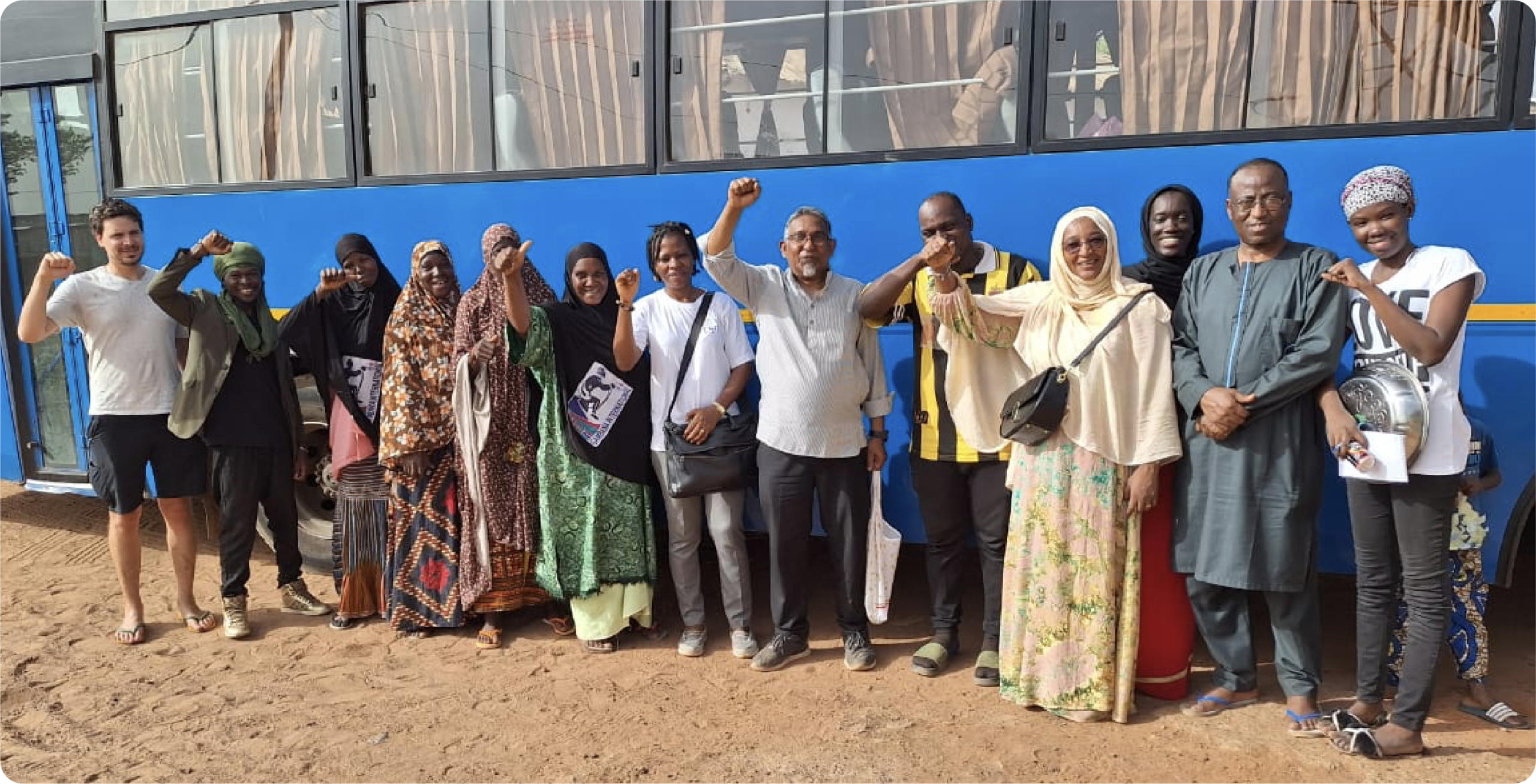
From the ground up, this coalition is shaping a more just and responsive future
Through our Human Rights Experts training program, we support grassroots advocates with essential human rights knowledge and practical skills. With tailored capacity-building training, they are empowered to become effective leaders, equipped to drive change and make their voices heard on both local and global stages.These changemakers are now at the forefront of transformation in their communities, leading impactful initiatives. Since 2019, 62 community members from 19 countries have completed the Rights Experts Program. These individuals are now actively driving change within their communities through various initiatives:
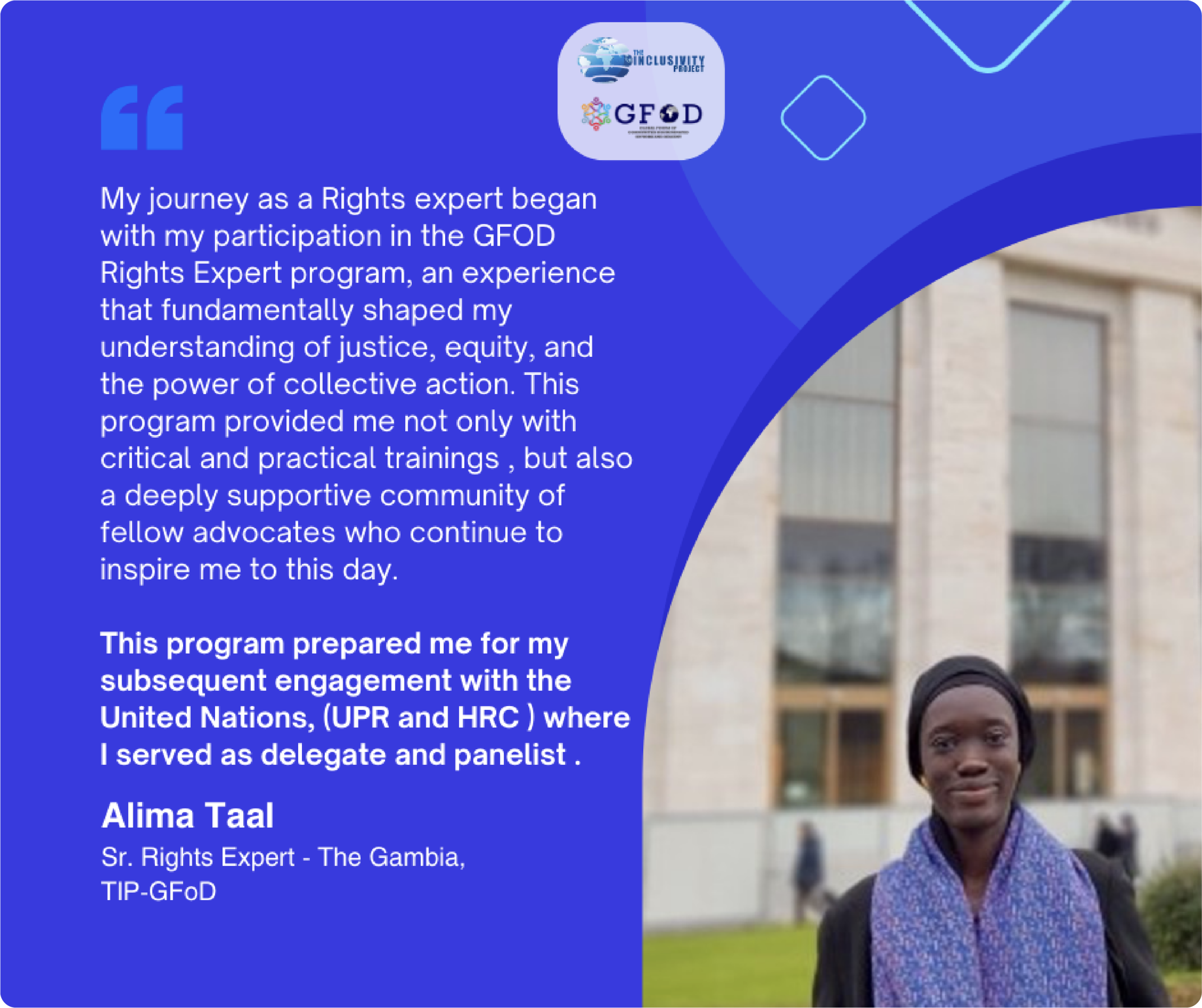
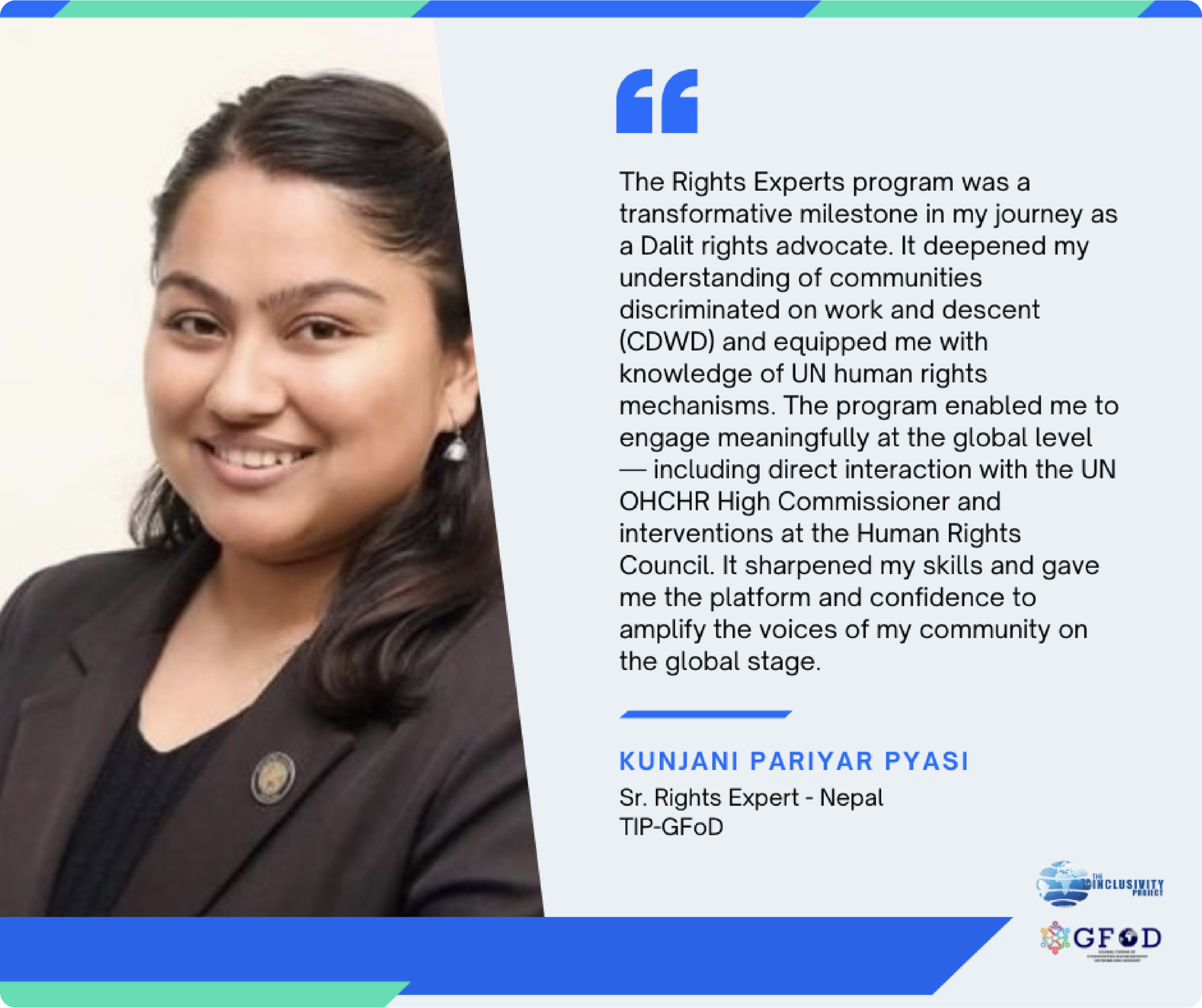
The Inclusivity Project amplifies the voices of communities affected by discrimination based on work and descent by creating pathways for their stories to be heard at regional and global human rights platforms, including the United Nations. By supporting grassroots leaders to speak directly to international audiences, the project brings visibility to deeply rooted injustices that are often ignored. This growing global recognition builds pressure on national governments, sparking dialogue, influencing policy, and catalyzing legislative or constitutional changes aimed at addressing the systemic human rights violations these communities face. Through this powerful platforming, local struggles are transformed into global calls for justice.
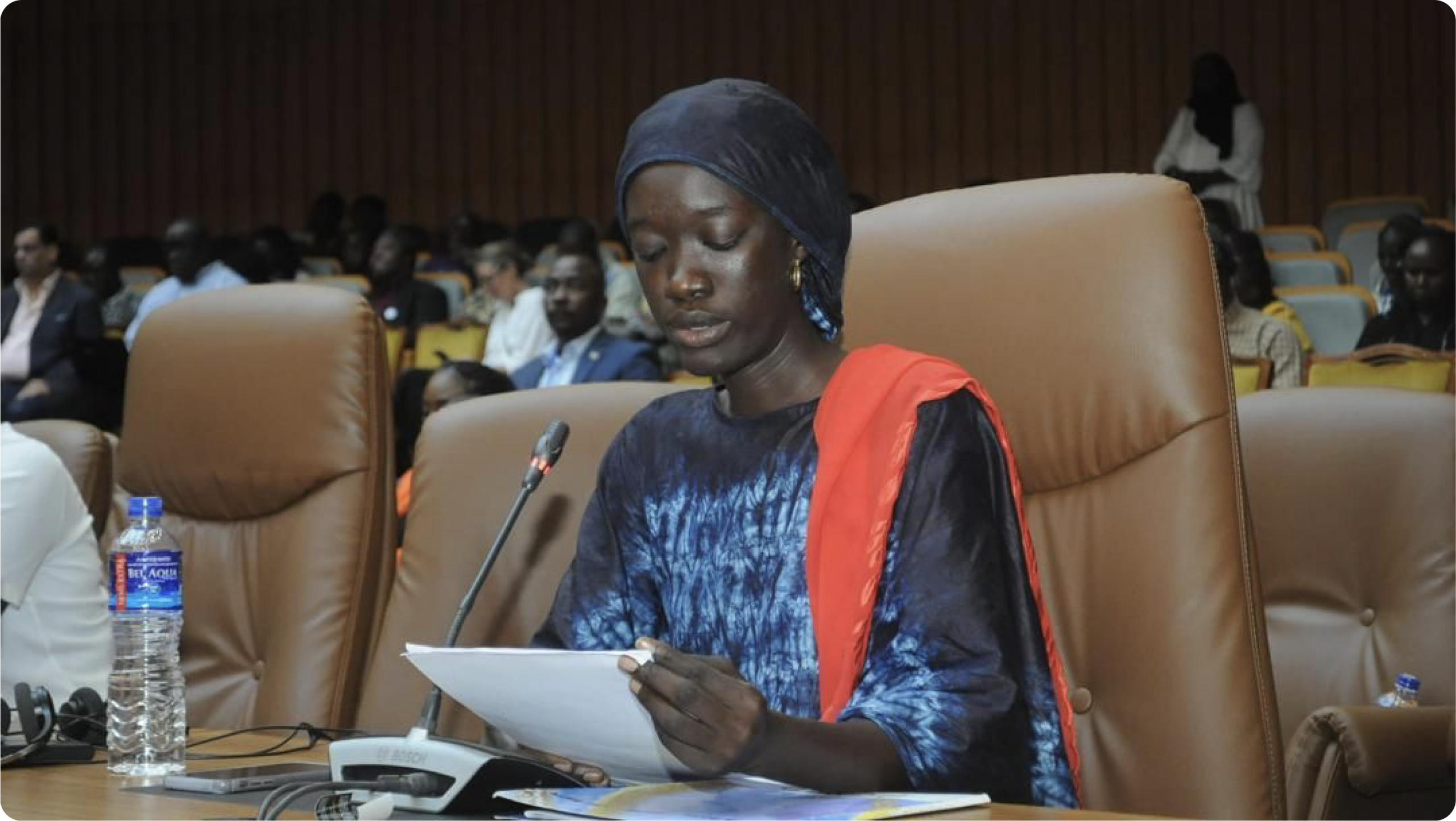
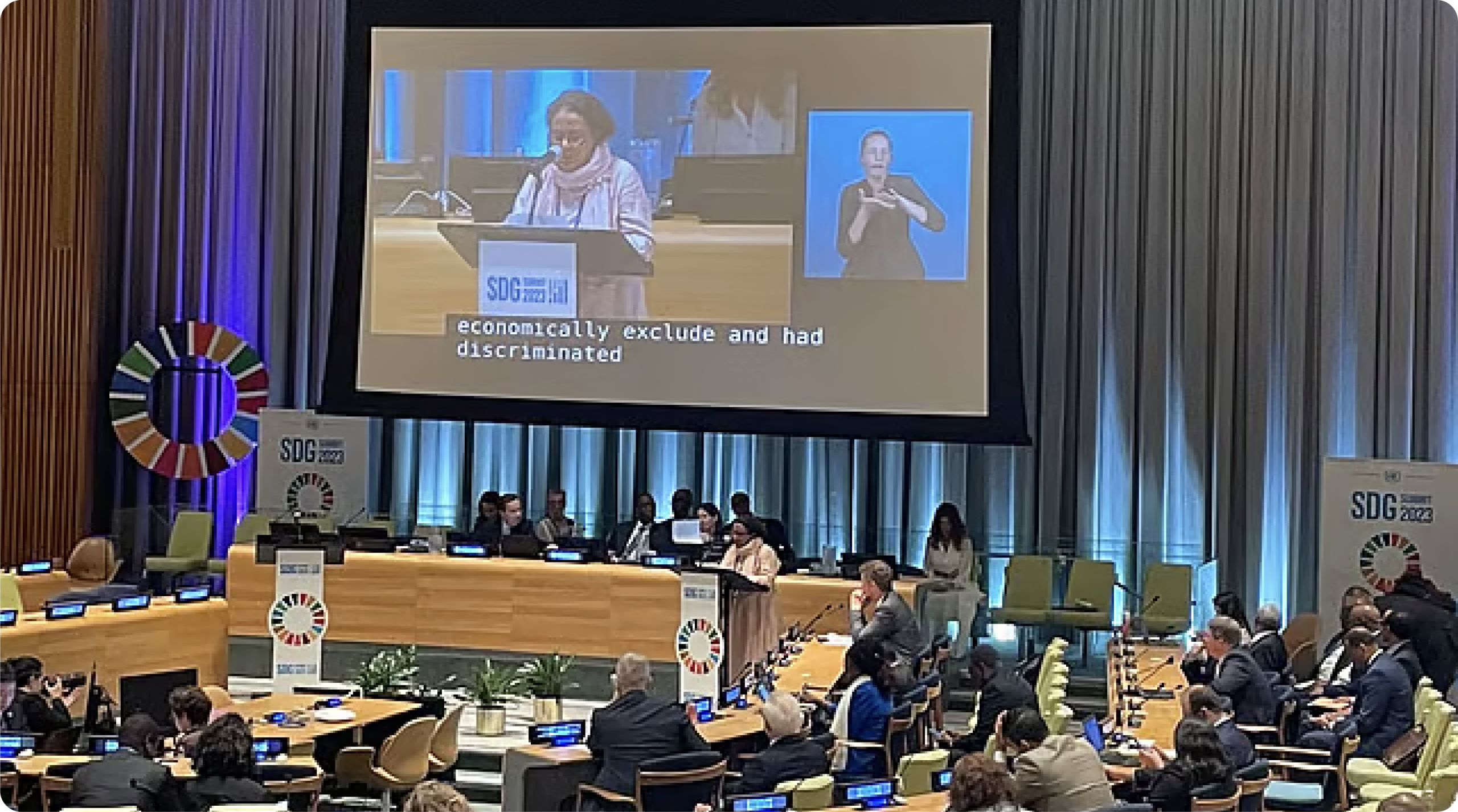
Through their persistent advocacy, our community partners in Nepal have achieved meaningful progress — securing formal recognition from the Nepal Government of Dalit communities in the Constitution and highlighting the need to address caste-based discrimination. This marks an important step toward justice and inclusion for historically marginalized voices.
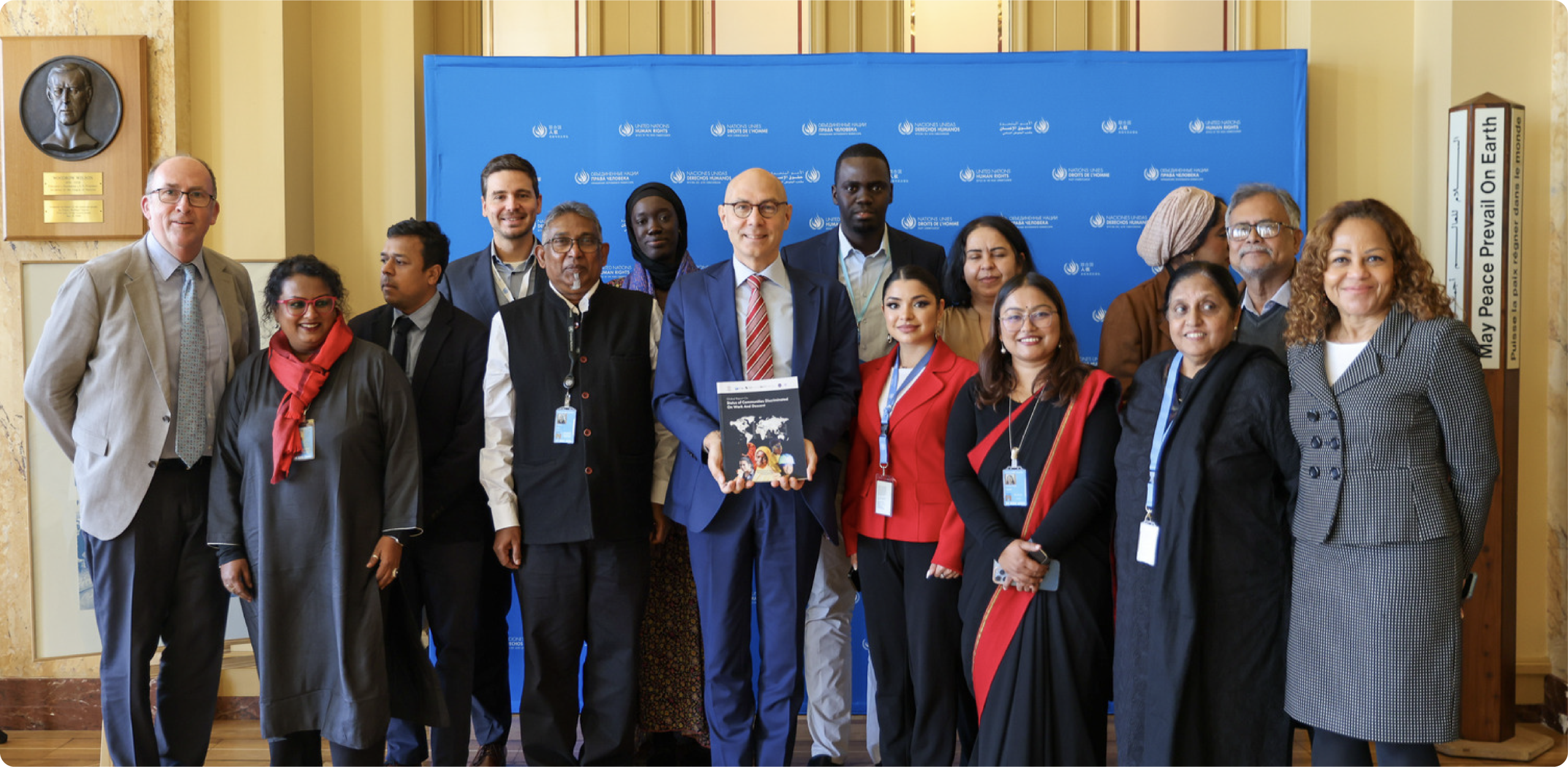
Through their persistent advocacy, our community partners in Nepal have achieved meaningful progress — securing formal recognition from the Nepal Government of Dalit communities in the Constitution and highlighting the need to address caste-based discrimination. This marks an important step toward justice and inclusion for historically marginalized voices.
At The Inclusivity Project (TIP), our strength lies in the deep-rooted partnerships we have built with grassroots organizations across Africa, Asia, Latin America, and Europe. These partners work directly with communities facing Discrimination based on Work and Descent (DWD), addressing systemic exclusion, advocating for rights, and driving change. Their leadership and insights shape our global engagements, ensuring that TIP’s engagements at the UN are grounded in the realities of the grassroots
https://globalforumcdwd.org