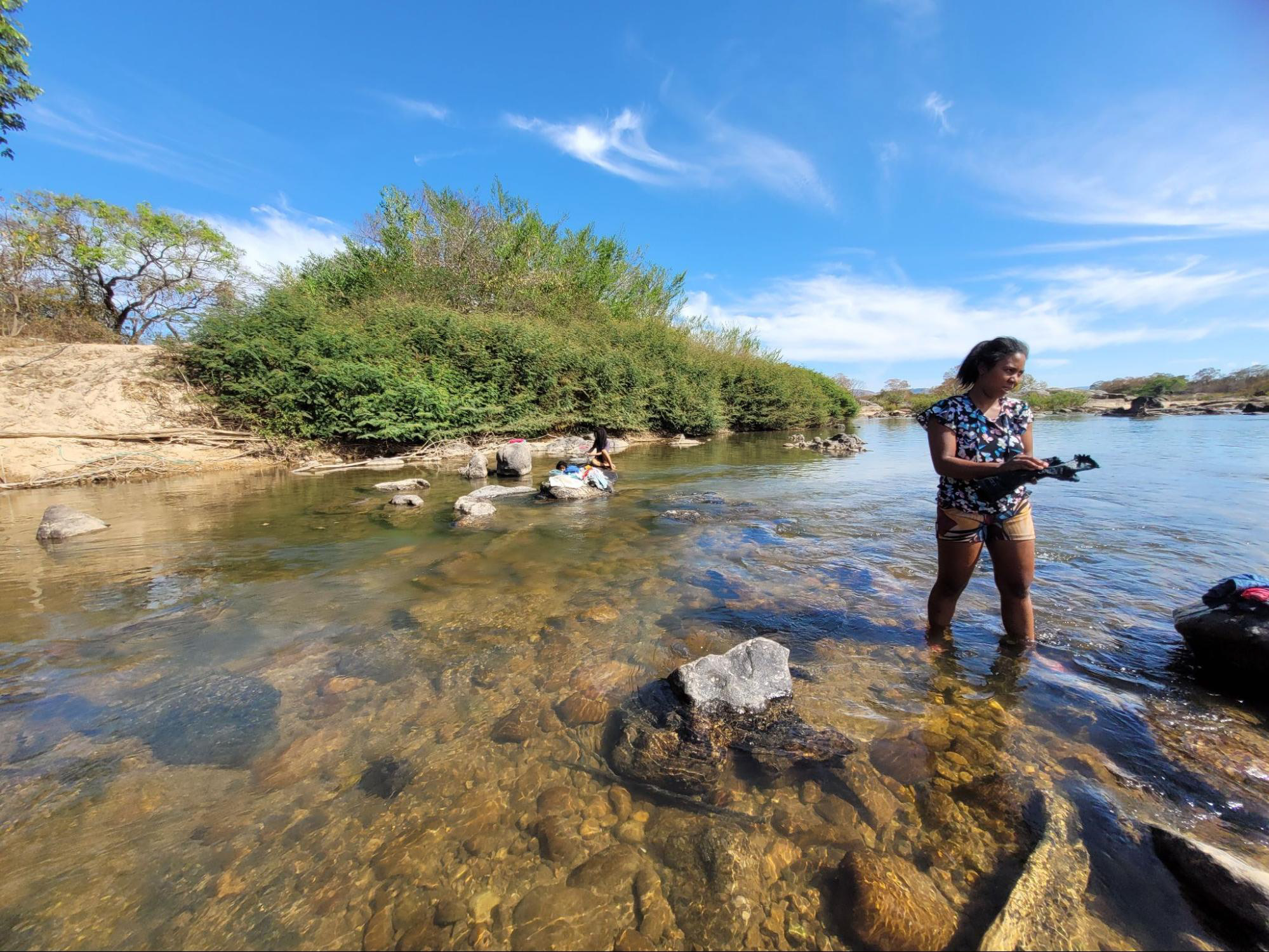
Quilombola Community in Kalunga land, a Quilombola territory in Brazil.
For Communities Discriminated on Work and Descent (CDWD), the impacts of climate change are not episodic—they are constant, cumulative, and deeply entrenched in existing patterns of exclusion. Systematically denied access to economic, social, and environmental resources, these communities are often forced to live in high-risk, disaster-prone areas without adequate housing, infrastructure, or legal protections. In Brazil, Quilombola communities face ongoing land dispossession as industrial projects backed by the state encroach on ancestral territories. Roma communities across Europe endure chronic housing discrimination, confined to overcrowded, underserved settlements. In India, Dalit populations are routinely excluded from social protection and Disaster Risk Reduction (DRR) systems, leaving them highly vulnerable to recurrent climate shocks. In Mauritania, the Haratin continue to face barriers to land rights as desertification steadily worsens food insecurity.

We have documented these persistent vulnerabilities through grassroots-led, actionable research—culminating in a Global Policy Brief on CDWD and climate justice. These findings now inform our advocacy at the UN and other regional mechanisms, ensuring that climate resilience for CDWD communities becomes a global priority. Our partners are central to this work. In Asia, our partners drive multi-level interventions in DRR and Climate Change Adaptation. Across Europe, our networks advance environmental justice for Roma communities through strategic advocacy and engagement with EU climate frameworks. Together, we are challenging the narrative that climate crises are temporary—and making clear that for CDWD communities, climate injustice is a daily reality demanding urgent, systemic action.
Read the Special Rapporteur’s report on Right to Development on climate change and its impact on Communities Discriminated on Work and Descent